

Celiac Awareness
Awareness Food Aprons Featuring Sarcastic White Typography
Awareness food aprons - White text inside a square border reading if you could stop putting gluten in everything that
US$19.95
Flat US$4.95 US shipping · free over US$65.00 · sales tax is calculated from your shipping address at checkout.
1
US$19.95
Delivery to United States
Arrives —
Orders ship within the United States only. Flat US$4.95 shipping under US$65.00 — free from US$65.00.
Returns
Request a return or exchange within 30 days of purchase, for any reason — we cover return shipping.
Printed to order
Every apron is printed after you order it. Please allow 1-3 business days for processing before it leaves the print shop.
Awareness Food Aprons Featuring Sarcastic White Typography is printed on a black canvas apron — one size, made to order and shipped within the United States.
awareness food aprons puts the phrase if you could, stop putting F***ING GLUTEN in everything,, that would, be great across the front panel, and the white typography reads as a sarcastic plea from someone exhausted by hidden ingredients. Wearing it creates an immediate bond with others who face the same challenges, and those managing celiac disease or food allergies will recognize this sentiment as their own reality.
Every Detail On The Front
White lettering dominates the center of the apron, arranged in six stacked lines inside a crisp white square border. The font varies slightly in weight, giving the message a raw, handwritten emphasis that reinforces the frustrated tone. The layout is text-only, ensuring the sarcasm lands without visual distraction. This arrangement belongs to the category of typography art where the message itself is the primary subject. The stark contrast between the white print and the background ensures the words remain legible even in busy kitchen environments.
Built For These Hands
Cooks managing celiac disease notice the specific phrasing first because it captures a feeling they experience daily. Gifting this awareness food aprons to a friend or family member shows support for their dietary needs through humor rather than pity. It gets worn during meal prep when the wearer wants to signal their boundaries to housemates or guests without having to explain them verbally.
Practical Questions
What is the body size of this awareness food aprons? The body measures 28 inches wide by 34 inches long to cover the torso effectively. This dimension provides ample protection for the front of the body while cooking, ensuring that splashes or spills do not reach clothing underneath during active food preparation.
How does the ink hold up during washing? The print remains durable through wash cycles because the white ink is integrated into the fabric surface. Standard laundering methods will not cause the bold lettering to fade or peel, allowing the sarcasm to survive repeated use in a high-wash environment.
Why is this specific phrasing used instead of a standard warning? The text uses asterisks to censor a strong word, which conveys genuine exasperation more effectively than a polite request. This stylistic choice reflects the emotional reality of living with strict dietary restrictions, making the humor relatable to those who deal with accidental exposure constantly.
Every apron is printed after you order it. Orders are processed Monday through Friday, excluding federal holidays — please allow 1-3 business days for order processing. After processing, shipping typically takes 3-7 business days inside the United States, so the total delivery time from order placement is 4-10 business days.
US orders under US$65.00 pay a flat US$4.95 shipping; orders of US$65.00 or more ship free. Bearhap ships within the United States only — we do not ship to international addresses.
You may request a return or exchange within 30 days of the purchase date, for any reason. The apron must be unopened, unused and in its original packaging, with proof of purchase. We refund the item price in full to the original payment method — the original US$4.95 shipping fee is not refundable — and Bearhap covers all return shipping costs: email contact@bearhap.com for a free return label.
Care
Machine wash cold, inside out, with like colours. Tumble dry low or hang to dry. Do not iron directly over the print — press from the back if you need to. No bleach, no dry cleaning.
The ink is water-based and cures into the fabric, so it will soften with the canvas rather than peel off it.
Questions about Celiac Awareness aprons
- Who benefits most from wearing these designs?
- These aprons are made for individuals diagnosed with celiac disease or those managing gluten sensitivity. They also suit family members and caregivers who want to show support. The designs resonate with people who appreciate subtle advocacy tools that spark conversation and education during daily routines.
- What specific messages do these aprons convey?
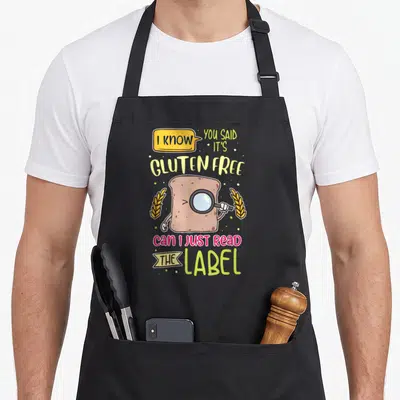
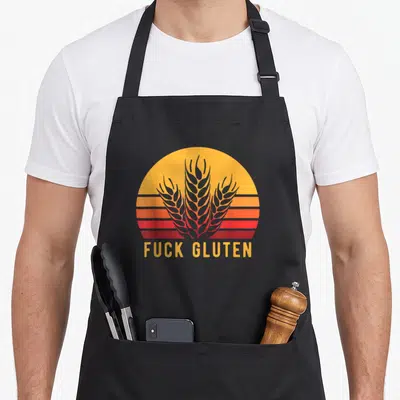
- The aprons convey messages of resilience, education, and community support. Some feature sunflowers representing hope, while others display bold text about lifestyle choices. Each design communicates a unique aspect of the celiac experience, helping wearers feel seen and understood by their peers.
- How should I choose the right design for me?
- Consider whether you prefer symbolic imagery like sunflowers or direct statements about lifestyle. If you advocate for children, the daughter-themed apron may resonate best. For broader education, the disease-focused designs offer clear visual cues. Select the one that aligns with your personal style and advocacy goals.
You might also like
More celiac awareness
- gluten celiac awareness apron
- gluten free celiac awareness apron
- disease gluten celiac awareness apron
- free lifestyle apron
- gluten lifestyle apron
- deceiving celiac awareness apron
- grain celiac awareness apron
- free celiac awareness apron