
Archaeologist
Blue Egyptian Apron Featuring Eye of Horus and Ankh Hybrid
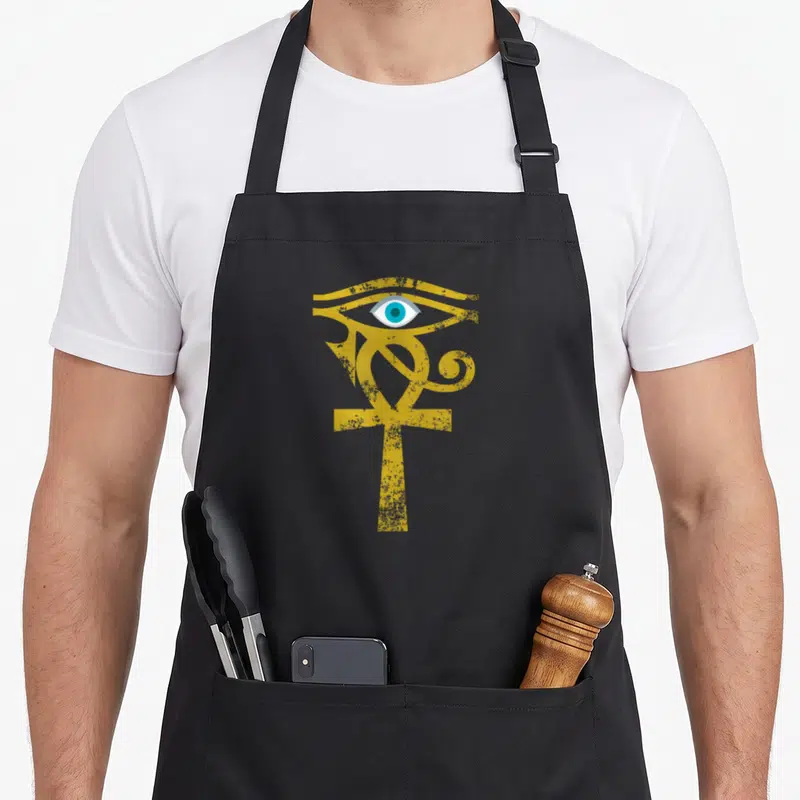
Blue egyptian apron - Gold and blue Eye of Horus above Ankh cross, distressed texture, no text
US$19.95
Flat US$4.95 US shipping · free over US$65.00 · sales tax is calculated from your shipping address at checkout.
1
US$19.95
Delivery to United States
Arrives —
Orders ship within the United States only. Flat US$4.95 shipping under US$65.00 — free from US$65.00.
Returns
Request a return or exchange within 30 days of purchase, for any reason — we cover return shipping.
Printed to order
Every apron is printed after you order it. Please allow 1-3 business days for processing before it leaves the print shop.
Blue Egyptian Apron Featuring Eye of Horus and Ankh Hybrid is printed on a black canvas apron — one size, made to order and shipped within the United States.
blue egyptian apron features a composite symbol combining the Eye of Horus at the top and an Ankh cross below it, centered vertically. The gold, blue, and white distressed print honors ancient Egyptian culture without text. Wearing it puts personal reverence across the front panel, and archaeology teachers or pyramid lovers feel this was crafted specifically for their passion.
The Artwork, Up Close
This blue egyptian apron displays a single composite symbol placing the Eye of Horus directly above the Ankh cross, aligned vertically down the center panel. Gold dominates the structure, with blue filling the iris and white outlining the eye’s sclera, all finished with a distressed texture that mimics weathered stone. The absence of printed words forces viewers to interpret the fusion as a standalone emblem of protection and vitality rooted in Pharaonic tradition.
Made For This Crowd
This blue egyptian apron attracts archaeology educators, students, and pyramid enthusiasts who prefer symbolic art over explanatory text. It makes a thoughtful gift for birthdays, retirements, or field season milestones. Daily use occurs during lectures, dig sites, or gallery walks where durability and cultural resonance carry equal weight.
Before You Add To Cart
Does the apron fit standard body types? Yes, the two front pockets measure 8 x 7 inches each and are split in the middle to accommodate varying waist sizes without restricting movement or comfort during extended wear. Will the ink survive repeated washing? The distressed gold and blue print is engineered to fade naturally with laundering, preserving its intended aged appearance rather than cracking or peeling like conventional screen-printed designs. Is this design unique to this product? Only this apron merges the Eye of Horus directly above the Ankh in a single vertical composite; other merchandise typically separates the symbols or adds textual explanations that dilute the visual unity.
Every apron is printed after you order it. Orders are processed Monday through Friday, excluding federal holidays — please allow 1-3 business days for order processing. After processing, shipping typically takes 3-7 business days inside the United States, so the total delivery time from order placement is 4-10 business days.
US orders under US$65.00 pay a flat US$4.95 shipping; orders of US$65.00 or more ship free. Bearhap ships within the United States only — we do not ship to international addresses.
You may request a return or exchange within 30 days of the purchase date, for any reason. The apron must be unopened, unused and in its original packaging, with proof of purchase. We refund the item price in full to the original payment method — the original US$4.95 shipping fee is not refundable — and Bearhap covers all return shipping costs: email contact@bearhap.com for a free return label.
Care
Machine wash cold, inside out, with like colours. Tumble dry low or hang to dry. Do not iron directly over the print — press from the back if you need to. No bleach, no dry cleaning.
The ink is water-based and cures into the fabric, so it will soften with the canvas rather than peel off it.
Questions about Archaeologist aprons
- Who should buy an apron from this archaeological collection?
- This collection is ideal for university students studying history, professional field researchers, and hobbyists who enjoy visiting museums. It also suits teachers who want to inspire young minds about ancient civilizations and anyone who appreciates the detailed process of unearthing historical artifacts through careful study and excavation techniques.
- What types of designs are included in these aprons?
- The aprons feature various themes such as the iconic Stonehenge monument, practical tools like sieves for sifting soil, and educational definitions of archaeological methods. You will also find designs focused on student life and guided tours, providing a wide range of visual options that celebrate different facets of the archaeological profession and its enduring appeal.
- How do I choose the right apron for my needs?
- Select a design based on your specific interest in the field. If you love ancient structures, pick the Stonehenge print. For those interested in field techniques, the sifting design is best. Students might prefer the learning-focused aprons, while educators could choose the definition-themed option to spark conversation and interest in their classroom or workshop environment effectively.
You might also like
More archaeologist
- ankh ancient egyptian apron
- pharaoh ancient egyptian apron
- maat egyptian apron
- archaeology archaeologist apron
- egypt egyptian apron
- eye egyptian apron
- sacred egyptian apron
- alkebulan egyptian apron