Eds Awareness
Ehler Genetics Apron Featuring Ehlers-Danlos Syndrome Gang
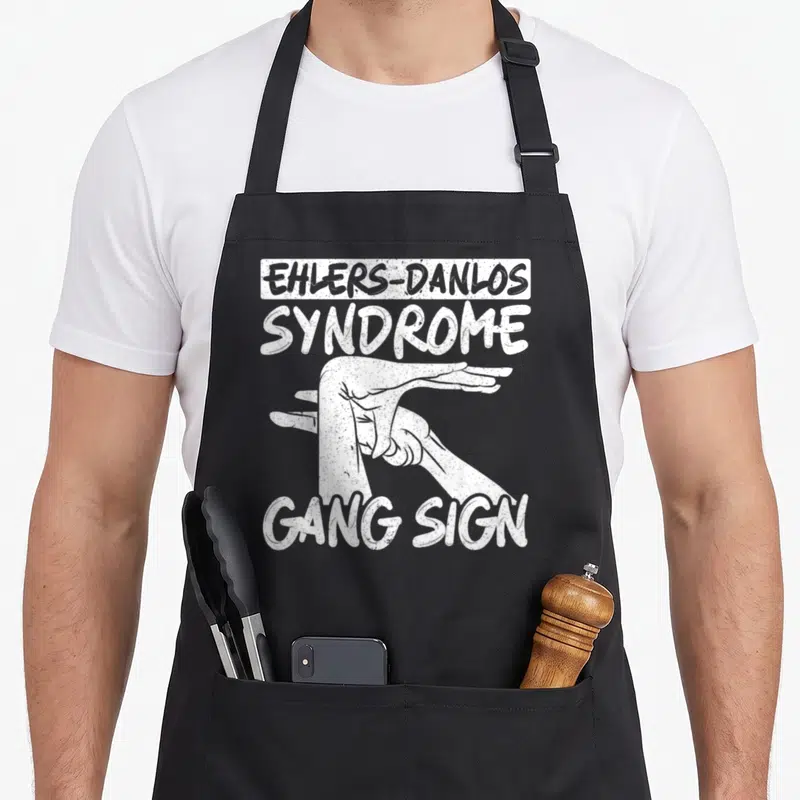
Ehler genetics apron - Distressed white hand graphic between Ehlers-Danlos Syndrome Gang Sign text
US$19.95
Flat US$4.95 US shipping · free over US$65.00 · sales tax is calculated from your shipping address at checkout.
1
US$19.95
Delivery to United States
Arrives —
Orders ship within the United States only. Flat US$4.95 shipping under US$65.00 — free from US$65.00.
Returns
Request a return or exchange within 30 days of purchase, for any reason — we cover return shipping.
Printed to order
Every apron is printed after you order it. Please allow 1-3 business days for processing before it leaves the print shop.
Ehler Genetics Apron Featuring Ehlers-Danlos Syndrome Gang is printed on a black canvas apron — one size, made to order and shipped within the United States.
The phrase "ehler genetics apron" introduces an item displaying "EHLERS-DANLOS SYNDROME GANG SIGN" in distressed white lettering. A hand graphic sits between the words to represent a specific gesture associated with the condition. This design uses sarcasm to acknowledge the reality of loose joints and velvety skin. Wearing it signals solidarity to those living with EDS or HSD. It is made specifically for fighters who never lose hope in their daily health journey.
Reading The Design
The artwork features a central illustration of a hand rendered in a distressed white style against the background. The text "EHLERS-DANLOS" appears inside a rectangular box at the top, while "SYNDROME" and "GANG SIGN" frame the hand below and above respectively. The layout positions the hand directly between the lower phrases to emphasize the gesture. All elements utilize a rough, worn texture that conveys a sense of grit rather than polish. This visual arrangement transforms a medical acronym into a symbol of community identity through humor.
When People Wear It
Individuals diagnosed with Ehlers-Danlos Syndrome or Hypermobile Syndrome wear this product to signal shared experience during casual activities. It serves as a conversation starter for awareness month events or support group gatherings where members identify with the sarcasm. Patients dealing with joint pain or stretchy skin find comfort in apparel that acknowledges their physical reality without pity. This specific apron becomes a uniform for those navigating the challenges of connective tissue disorders in everyday life.
Common Questions
What are the dimensions of this apron? This garment measures 28 inches wide by 34 inches long to provide ample coverage for the torso. Each waist tie extends 42 inches on both sides, ensuring a secure fit for various body sizes. These measurements allow the wearer to adjust the binding comfortably before beginning kitchen tasks or other household duties.
How does the ink withstand washing cycles? The distressed white print is designed to endure repeated laundering without fading or peeling from the fabric surface. The textured application mimics wear naturally, so standard cleaning methods do not degrade the visible design. This durability ensures the message remains legible and intact throughout the garment's lifespan.
Why is the hand gesture significant to this specific design? The central hand image represents the specific "gang sign" referenced in the printed text to create a sense of belonging. Unlike generic medical symbols, this graphic relies on the interaction between the pose and the surrounding typography to convey its meaning. It validates the unique identity of the syndrome community through a recognizable visual shorthand.
Every apron is printed after you order it. Orders are processed Monday through Friday, excluding federal holidays — please allow 1-3 business days for order processing. After processing, shipping typically takes 3-7 business days inside the United States, so the total delivery time from order placement is 4-10 business days.
US orders under US$65.00 pay a flat US$4.95 shipping; orders of US$65.00 or more ship free. Bearhap ships within the United States only — we do not ship to international addresses.
You may request a return or exchange within 30 days of the purchase date, for any reason. The apron must be unopened, unused and in its original packaging, with proof of purchase. We refund the item price in full to the original payment method — the original US$4.95 shipping fee is not refundable — and Bearhap covers all return shipping costs: email contact@bearhap.com for a free return label.
Care
Machine wash cold, inside out, with like colours. Tumble dry low or hang to dry. Do not iron directly over the print — press from the back if you need to. No bleach, no dry cleaning.
The ink is water-based and cures into the fabric, so it will soften with the canvas rather than peel off it.
Questions about Eds Awareness aprons
- Who should consider purchasing an apron from this Ehlers-Danlos collection?
- This collection is ideal for individuals diagnosed with EDS, their family members, caregivers, and healthcare providers. It also suits allies who want to show support and raise awareness about joint hypermobility syndromes in professional or casual environments.
- What makes the zebra designs in this set unique compared to other awareness items?
- The zebra patterns here are specifically tailored to represent the rarity and complexity of Ehlers-Danlos Syndromes. Designs like the warrior and joint zebras offer targeted symbolism for different aspects of the condition, making them more relevant than generic awareness apparel.
- How can I choose the right design if I am new to EDS advocacy?
- Start by considering what aspect of the experience you wish to highlight. The joint zebra focuses on physical stability, while the faking zebra addresses invisible symptoms. Select the motif that best resonates with your personal journey or the message you want to convey.
You might also like
More eds awareness
- danlo eds awareness apron
- ehler body apron
- ehler zebra apron
- ehler eds awareness apron
- ehler danlo eds awareness apron
- warrior ehler zebra apron
- peace eds awareness apron
- ehler mama bear apron

Ehler Body Apron: Your Body
US$19.95