

Ghanaian
Est Ghanaian Apron Featuring the Ghana Flag
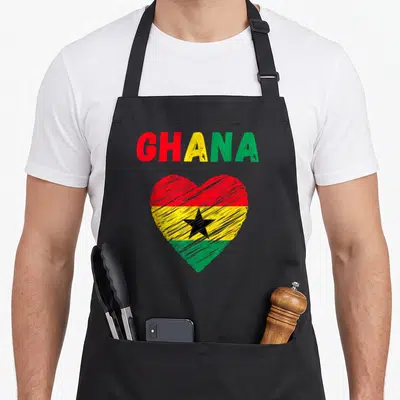
Est ghanaian apron - Ghana flag with arched GHANA and EST 1957 text in distressed white and tricolor stripes
US$19.95
Flat US$4.95 US shipping · free over US$65.00 · sales tax is calculated from your shipping address at checkout.
1
US$19.95
Delivery to United States
Arrives —
Orders ship within the United States only. Flat US$4.95 shipping under US$65.00 — free from US$65.00.
Returns
Request a return or exchange within 30 days of purchase, for any reason — we cover return shipping.
Printed to order
Every apron is printed after you order it. Please allow 1-3 business days for processing before it leaves the print shop.
Est Ghanaian Apron Featuring the Ghana Flag is printed on a black canvas apron — one size, made to order and shipped within the United States.
est ghanaian apron puts the printed words GHANA across the front panel in an arched formation, and the text EST 1957 split on either side of the center image reads as a historical marker of national establishment. Wearing it allows the user to protect their clothing while displaying cultural pride, and this design was created for people honoring Ghanaian independence day.
Looking At The Front Panel
The word GHANA appears in large white distressed block letters spanning the upper chest area in a distinct upward curve. Centered beneath the arch is the flag of Ghana composed of horizontal red, yellow, and green stripes with a solid black five-pointed star positioned in the middle yellow band. The phrase EST 1957 is printed in smaller white distressed text, with EST to the left of the flag and 1957 to the right. All elements share a weathered texture that mimics aged screen printing on fabric. This composition creates a unified emblem of national identity rather than a collection of separate graphics.
Who Gets The Joke
Ghanaians and members of the diaspora recognize this apron immediately as a symbol of national sovereignty. Families wearing matching pieces to a festival or independence celebration signal a collective bond through shared heritage. The design appeals to anyone who views cooking or manual labor as an extension of cultural expression. It transforms a utilitarian garment into a statement of belonging without relying on complex humor or inside jokes.
Answers Up Front
Does the apron have storage space for tools? Yes, this apron includes two front pockets that measure exactly 8 by 7 inches each. These pockets are split in the middle to allow for deeper access, making them suitable for holding long-handled utensils or small kitchen tools while keeping hands free during food preparation.
Can the distressed print withstand repeated washing? The distressed effect is part of the intentional design and not a sign of damage, so the print remains intact through standard laundering. The white ink used for the lettering adheres to the 10 oz cotton canvas fabric and retains its vintage appearance even after multiple wash cycles without fading or cracking.
What specific historical date does the design reference? The number 1957 refers to the year Ghana gained independence from colonial rule, establishing itself as a sovereign nation. This date anchors the design in a specific historical moment rather than representing a numerical age or anniversary count, making it a permanent marker of national origin.
Every apron is printed after you order it. Orders are processed Monday through Friday, excluding federal holidays — please allow 1-3 business days for order processing. After processing, shipping typically takes 3-7 business days inside the United States, so the total delivery time from order placement is 4-10 business days.
US orders under US$65.00 pay a flat US$4.95 shipping; orders of US$65.00 or more ship free. Bearhap ships within the United States only — we do not ship to international addresses.
You may request a return or exchange within 30 days of the purchase date, for any reason. The apron must be unopened, unused and in its original packaging, with proof of purchase. We refund the item price in full to the original payment method — the original US$4.95 shipping fee is not refundable — and Bearhap covers all return shipping costs: email contact@bearhap.com for a free return label.
Care
Machine wash cold, inside out, with like colours. Tumble dry low or hang to dry. Do not iron directly over the print — press from the back if you need to. No bleach, no dry cleaning.
The ink is water-based and cures into the fabric, so it will soften with the canvas rather than peel off it.
Questions about Ghanaian aprons
- Who is the ideal wearer for these designs?
- These aprons suit individuals who want to visibly celebrate their Ghanaian heritage during cooking or crafting. They make thoughtful gifts for relatives who value cultural connection and wish to wear their pride on their sleeve while preparing meals or engaging in creative hobbies at home.
- What themes do the available designs cover?
- The designs explore various aspects of Ghanaian identity, including national maps, travel memories, and familial bonds. Each piece highlights specific elements like the flag colors or historical references, ensuring that the wearer feels represented and connected to the broader narrative of Ghanaian history and modern life.
- How should I choose between the different styles?
- Consider whether you prefer a focus on geography, such as the map design, or emotional connections, like the blood or husband variations. Selecting based on personal resonance ensures the apron reflects your unique story and serves as a talking point among friends and family during gatherings.
You might also like
More ghanaian
- ghana flag ghanaian apron
- ghana country apron
- ghana ghanaian pride apron
- ghana pride apron
- flag ghanaian apron
- flag ghanaian pride apron
- ghanaian pride apron
- ghanaian ghana american flag apron