

Ethiopian
History Ethiopian Boy Apron: Got History? Four Black
History ethiopian boy apron - Four black line-art faces in grid above text got history?
US$19.95
Flat US$4.95 US shipping · free over US$65.00 · sales tax is calculated from your shipping address at checkout.
1
US$19.95
Delivery to United States
Arrives —
Orders ship within the United States only. Flat US$4.95 shipping under US$65.00 — free from US$65.00.
Returns
Request a return or exchange within 30 days of purchase, for any reason — we cover return shipping.
Printed to order
Every apron is printed after you order it. Please allow 1-3 business days for processing before it leaves the print shop.
History Ethiopian Boy Apron: Got History? Four Black is printed on a black canvas apron — one size, made to order and shipped within the United States.
history ethiopian boy apron puts the phrase got history? across the front panel, and the four stylized black line-art portraits of Ethiopian emperors read as a bold declaration of heritage. The question lands as a playful challenge to anyone who assumes cooking is just about recipes rather than lineage. Wearing it signals that the wearer values deep cultural roots alongside their culinary skills, and this specific design was made for home chefs with Abyssinian ancestry who want to honor their forebears in the kitchen.
What The Print Says
The printed artwork features four distinct male faces arranged in a 2x2 grid, rendered entirely in black line-art style against the fabric background. Centered below these portraits is the text got history? in a simple, lowercase font. The visual arrangement creates a balanced composition where the historical figures anchor the humorous query. This combination transforms a standard kitchen garment into a conversation piece that blends humor with respect for Ethiopian leadership and legacy.
The Cook It Was Made For
This apron suits cooks who identify with Ethiopian heritage or study African history while preparing meals. It serves as a unique gift for someone who appreciates the intersection of culinary arts and ancestral pride. The product gets worn during family gatherings or holiday feasts where traditional dishes are prepared, allowing the wearer to display their connection to emperors like Menelik II or Selassie I without speaking a word.
Ordering Questions
Is the waist tie long enough to fit different body types? Yes, the waist ties measure 42 inches on each side, providing ample length to secure a comfortable knot in front regardless of torso size. This generous dimension ensures the apron stays in place during active cooking tasks without digging into the waistline.
Does the ink durability hold up to repeated laundering? The black print is designed to withstand washing cycles because it adheres firmly to the fabric surface rather than sitting loosely on top. Users can maintain the sharp contrast of the line-art portraits through standard cleaning routines without fear of fading or peeling.
Why does this design stand out from generic cooking aprons? It specifically references Ethiopian imperial history through stylized portraits rather than using generic food imagery or abstract patterns. The inclusion of the got history? phrase connects the visual representation of past leaders directly to the act of cooking, creating a unique narrative only this product carries.
Every apron is printed after you order it. Orders are processed Monday through Friday, excluding federal holidays — please allow 1-3 business days for order processing. After processing, shipping typically takes 3-7 business days inside the United States, so the total delivery time from order placement is 4-10 business days.
US orders under US$65.00 pay a flat US$4.95 shipping; orders of US$65.00 or more ship free. Bearhap ships within the United States only — we do not ship to international addresses.
You may request a return or exchange within 30 days of the purchase date, for any reason. The apron must be unopened, unused and in its original packaging, with proof of purchase. We refund the item price in full to the original payment method — the original US$4.95 shipping fee is not refundable — and Bearhap covers all return shipping costs: email contact@bearhap.com for a free return label.
Care
Machine wash cold, inside out, with like colours. Tumble dry low or hang to dry. Do not iron directly over the print — press from the back if you need to. No bleach, no dry cleaning.
The ink is water-based and cures into the fabric, so it will soften with the canvas rather than peel off it.
Questions about Ethiopian aprons
- Who is the ideal recipient for these designs?
- These aprons suit individuals celebrating Ethiopian heritage, historians interested in imperial leadership, and Christian communities valuing religious symbolism. They also appeal to those who appreciate Amharic calligraphy as an art form. Anyone seeking to honor their cultural background through wearable art will find these pieces meaningful and appropriate for daily use.
- What specific symbols are featured in this set?
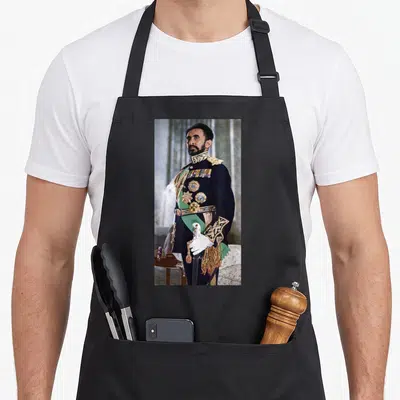
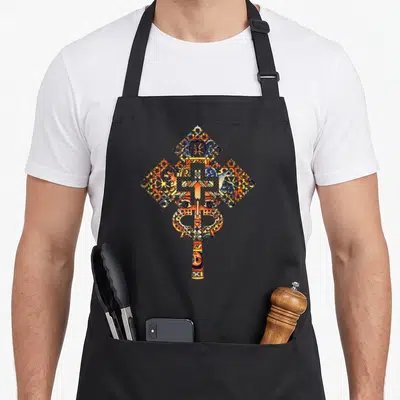
- The collection highlights the traditional cross, representing deep-rooted Christian faith within Ethiopia. Portraits of Emperor Haile Selassie appear on select items, honoring political and spiritual history. Amharic text adds linguistic beauty, while imagery of national landmarks reinforces a sense of place and belonging for those connected to the region's diverse landscape.
- How do I choose between the cross and portrait options?
- Select the cross design if your primary goal is expressing religious devotion or connecting with church traditions. Choose the portrait option to celebrate historical figures and national pride. Consider whether you prefer abstract spiritual symbols or recognizable human likenesses when deciding which style best reflects your personal values and aesthetic preferences.
You might also like
More ethiopian
- ethiopian traditional apron
- emperor ethiopian apron
- straight ethiopian boy apron
- empress ethiopian apron
- outta ethiopian boy apron
- oromo ethiopian boy apron
- ethiopian christian apron
- rasta ethiopian boy apron