
Native American
Immigration Native American Apron Features a Vintage Photo
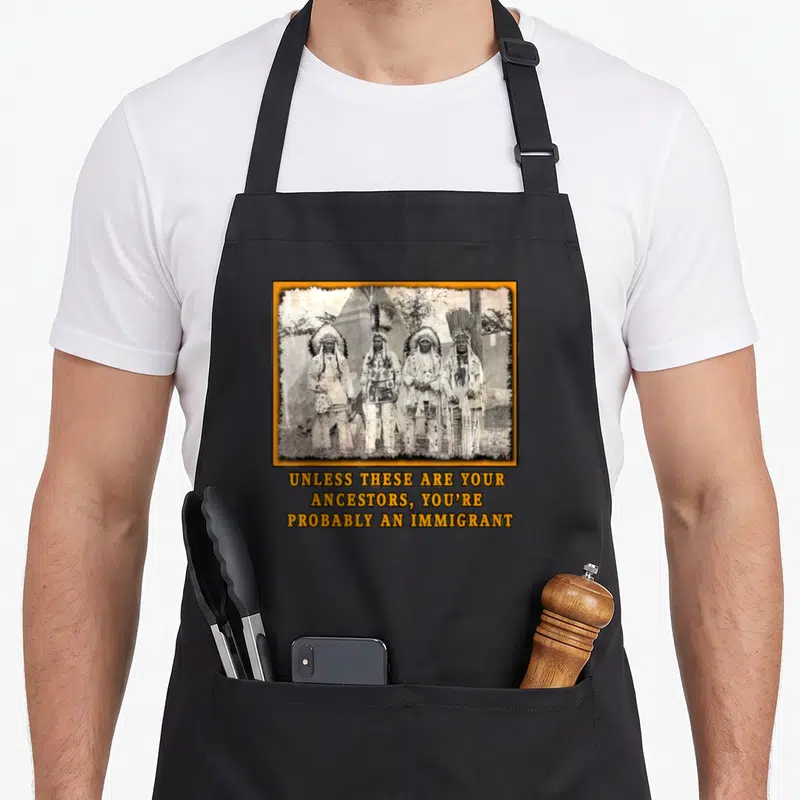
Immigration native american apron - Four Native Americans in sepia photo with orange frame and text about ancestors
US$19.95
Flat US$4.95 US shipping · free over US$65.00 · sales tax is calculated from your shipping address at checkout.
1
US$19.95
Delivery to United States
Arrives —
Orders ship within the United States only. Flat US$4.95 shipping under US$65.00 — free from US$65.00.
Returns
Request a return or exchange within 30 days of purchase, for any reason — we cover return shipping.
Printed to order
Every apron is printed after you order it. Please allow 1-3 business days for processing before it leaves the print shop.
Immigration Native American Apron Features a Vintage Photo is printed on a black canvas apron — one size, made to order and shipped within the United States.
immigration native american apron puts a sepia photo of four Native Americans in an orange frame across the front, and the text UNLESS THESE ARE YOUR ANCESTORS, YOU'RE PROBABLY AN IMMIGRANT reads as a sarcastic commentary on land ownership. Wearing it signals support for immigrant history and respect for Indigenous people, and this design was made for those who value heritage over assumptions.
The Design Itself
A sepia photograph of four Native Americans stands centered within a bold orange border, their traditional attire and feathered headdresses rendered in vintage photographic detail. Below them, three stacked lines of orange text deliver a blunt message using sarcasm to question inherited claims to land. The color palette of sepia and orange gives the image a aged yet striking appearance that draws attention without overwhelming the subject. This composition belongs to a tradition of using historical imagery to spark dialogue about identity, ownership, and cultural respect.
Occasions It Fits
Someone wearing this at a family dinner or community potluck immediately draws attention to its layered meaning. The immigration native american apron works well when discussing heritage, politics, or social justice over shared meals. It suits cooks who enjoy blending humor with thought-provoking statements while preparing food for guests who appreciate nuance.
Things People Ask
Does the waist tie fit different body sizes? Yes, the 42-inch ties on each side allow secure tying in front for most builds. The 28-by-34-inch panel accommodates torsos from small to large without restricting movement during cooking or serving.
Will the orange ink fade after washing? The printed orange text and frame are designed to withstand regular laundering. Following care instructions helps preserve vibrancy, though any direct-print design may show slight fading over many wash cycles.
Why does this design reference ancestors rather than just being a historical print? The phrase targets the assumption that non-Native residents have automatic connection to the land. By naming ancestors specifically, it forces reflection on lineage, displacement, and whose history is considered legitimate in public spaces.
Every apron is printed after you order it. Orders are processed Monday through Friday, excluding federal holidays — please allow 1-3 business days for order processing. After processing, shipping typically takes 3-7 business days inside the United States, so the total delivery time from order placement is 4-10 business days.
US orders under US$65.00 pay a flat US$4.95 shipping; orders of US$65.00 or more ship free. Bearhap ships within the United States only — we do not ship to international addresses.
You may request a return or exchange within 30 days of the purchase date, for any reason. The apron must be unopened, unused and in its original packaging, with proof of purchase. We refund the item price in full to the original payment method — the original US$4.95 shipping fee is not refundable — and Bearhap covers all return shipping costs: email contact@bearhap.com for a free return label.
Care
Machine wash cold, inside out, with like colours. Tumble dry low or hang to dry. Do not iron directly over the print — press from the back if you need to. No bleach, no dry cleaning.
The ink is water-based and cures into the fabric, so it will soften with the canvas rather than peel off it.
Questions about Native American aprons
- Who is this collection best suited for?
- These pieces suit individuals honoring Native heritage, allies showing support, or anyone appreciating Indigenous art and history. They resonate with those valuing cultural expression, historical acknowledgment, and community solidarity in everyday wear.
- What themes are represented in these aprons?
- Themes include cultural pride, historical narrative, social justice, family bonds, and spiritual values. Designs cover topics like immigration, strength, peace, and traditional symbols such as horses, reflecting diverse experiences within Native American life.
- How do I choose the right design?
- Select based on your personal connection to the theme. Consider if you want to highlight heritage, advocate for rights, celebrate family, or express spiritual values. Each design carries distinct meaning relevant to specific aspects of Native identity.
You might also like
More native american
- built native american apron
- illegal native american apron
- land native american apron
- grown native american apron
- ancestor unless apron
- immigration indigenous native american apron
- original native american aprons
- should native american apron