

Native American
Kokopelli Native American Apron Featuring a Tie-dye Stylized
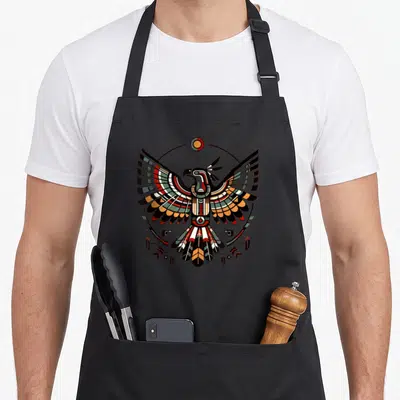
Kokopelli native american apron - Tie-dye Kokopelli figure above feathered arrow in blue pink yellow green purple
US$19.95
Flat US$4.95 US shipping · free over US$65.00 · sales tax is calculated from your shipping address at checkout.
1
US$19.95
Delivery to United States
Arrives —
Orders ship within the United States only. Flat US$4.95 shipping under US$65.00 — free from US$65.00.
Returns
Request a return or exchange within 30 days of purchase, for any reason — we cover return shipping.
Printed to order
Every apron is printed after you order it. Please allow 1-3 business days for processing before it leaves the print shop.
Kokopelli Native American Apron Featuring a Tie-dye Stylized is printed on a black canvas apron — one size, made to order and shipped within the United States.
The kokopelli native american apron puts a multi-colored stylized figure standing above a feathered arrow across the front panel, and the tie-dye technique blends blue, pink, yellow, green, and purple into the silhouette of the humpbacked flute player. Wearing it connects the wearer to southwestern folklore and PUEBLO KACHINA SPIRIT symbolism, and ethno-folklore fans or musicians feel this specific representation honors their interest in trickster gods and ancestral art.
The Print, Up Close
A stylized figure dominates the upper panel, rendered in a tie-dye style that merges blue, pink, yellow, green, and purple into swirling patterns within the character's outline. Below the figure sits a multi-colored arrow featuring a feathered tail on the left and a pointed tip on the right, matching the vibrant hue spectrum of the player above. The image-correction confirms the arrow extends horizontally beneath the figure rather than appearing as a separate graphic element. No printed words appear on the surface, allowing the visual relationship between the flute player and the arrow to convey the cultural reference solely through shape and color arrangement. This vertical alignment creates a cohesive pictograph that reads as a single spiritual emblem rather than two disconnected illustrations.
Made For This Crowd
Fans of Pueblo Kachina spirits notice the specific iconography of the humpbacked flute player combined with the feathered arrow, identifying it as a representation of the trickster god. Gifting this item to someone who loves ethno and folklore art acknowledges their specific interest in southwestern culture and free spirit aesthetics. Everyday situations like cooking, crafting, or attending cultural events become opportunities to display this joyful design without needing verbal explanation or textual context.
Before You Add To Cart
Does the apron fit different body types? Yes, because the waist ties measure 42 inches on each side, which provides sufficient length to wrap around larger frames and tie securely in the front center. Will the tie-dye colors fade after washing? The ink durability is designed to withstand laundering, keeping the blue, pink, yellow, green, and purple saturation intact through regular cleaning cycles. How does this differ from other Kokopelli aprons? This specific design includes a detailed feathered arrow positioned directly beneath the figure, a detail not present in standard versions that only show the flute player alone.
Every apron is printed after you order it. Orders are processed Monday through Friday, excluding federal holidays — please allow 1-3 business days for order processing. After processing, shipping typically takes 3-7 business days inside the United States, so the total delivery time from order placement is 4-10 business days.
US orders under US$65.00 pay a flat US$4.95 shipping; orders of US$65.00 or more ship free. Bearhap ships within the United States only — we do not ship to international addresses.
You may request a return or exchange within 30 days of the purchase date, for any reason. The apron must be unopened, unused and in its original packaging, with proof of purchase. We refund the item price in full to the original payment method — the original US$4.95 shipping fee is not refundable — and Bearhap covers all return shipping costs: email contact@bearhap.com for a free return label.
Care
Machine wash cold, inside out, with like colours. Tumble dry low or hang to dry. Do not iron directly over the print — press from the back if you need to. No bleach, no dry cleaning.
The ink is water-based and cures into the fabric, so it will soften with the canvas rather than peel off it.
Questions about Native American aprons
- Who is this collection best suited for?
- These pieces suit individuals honoring Native heritage, allies showing support, or anyone appreciating Indigenous art and history. They resonate with those valuing cultural expression, historical acknowledgment, and community solidarity in everyday wear.
- What themes are represented in these aprons?
- Themes include cultural pride, historical narrative, social justice, family bonds, and spiritual values. Designs cover topics like immigration, strength, peace, and traditional symbols such as horses, reflecting diverse experiences within Native American life.
- How do I choose the right design?
- Select based on your personal connection to the theme. Consider if you want to highlight heritage, advocate for rights, celebrate family, or express spiritual values. Each design carries distinct meaning relevant to specific aspects of Native identity.
You might also like
More native american
- ornament native american apron
- cross native american apron
- arrow native american apron
- thunderbird native american apron
- colorful native american aprons
- bow native american apron
- tribal heritage aprons
- heritage colorful native american aprons