
Tibetan
Padmasambhava Tibetan Apron Featuring a White Seated Deity
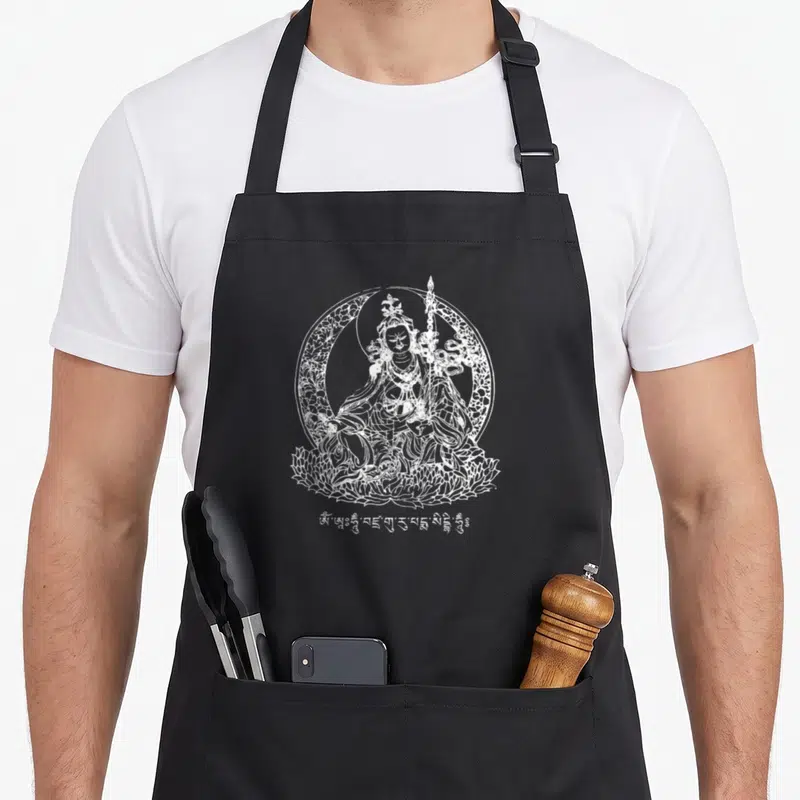
Padmasambhava tibetan apron - White line-art seated deity in circular halo above lotus, with Tibetan mantra text below
US$19.95
Flat US$4.95 US shipping · free over US$65.00 · sales tax is calculated from your shipping address at checkout.
1
US$19.95
Delivery to United States
Arrives —
Orders ship within the United States only. Flat US$4.95 shipping under US$65.00 — free from US$65.00.
Returns
Request a return or exchange within 30 days of purchase, for any reason — we cover return shipping.
Printed to order
Every apron is printed after you order it. Please allow 1-3 business days for processing before it leaves the print shop.
Padmasambhava Tibetan Apron Featuring a White Seated Deity is printed on a black canvas apron — one size, made to order and shipped within the United States.
padmasambhava tibetan apron puts a white line-art depiction of a seated deity across the front panel, framed by a circular halo and lotus flower. The printed Tibetan text below reads as a sacred mantra associated with Guru Rinpoche in Vajrayana Buddhism. Wearing it signals devotion and cultural respect to those familiar with the tradition. This design was made for practitioners, monks, nuns, and students of meditation who value spiritual symbolism in their daily wear.
The Artwork Explained
The artwork centers on a seated deity rendered entirely in white line art, positioned atop a detailed lotus flower and enclosed within an ornate circular halo. Below the figure, Tibetan script appears as a continuous row of characters, identified as a mantra linked to Padmasambhava. The composition follows traditional thangka aesthetics without color or shading, relying solely on contour and negative space. No humor or decorative embellishment exists beyond the sacred iconography and its textual counterpart.
Kitchens It Belongs In
This padmasambhava tibetan apron belongs in kitchens used by Buddhist practitioners during meal prep or ritual cooking. It serves as meaningful attire for sangha gatherings, meditation retreats, or yoga sessions where spiritual focus is maintained alongside domestic tasks. Gifting it to monks, nuns, yogis, dakas, or dakkinis honors their path without reducing faith to fashion. The apron functions as both protection and presence in spaces where mindfulness meets routine.
What Buyers Ask
What are the dimensions and fit of this apron? The body measures 28 inches wide by 34 inches long, providing ample coverage for most torso sizes. Each waist tie extends 42 inches, allowing secure knotting in front even over layered clothing. This generous length ensures the ties remain functional and comfortable regardless of the wearer’s build or garment thickness.
How does the ink hold up through washing? The white line-art print is designed to withstand repeated laundering without fading or cracking, as it uses durable pigment bonded to the fabric surface. Since no colors bleed or layer, the integrity of the deity’s outline and Tibetan script remains sharp after multiple wash cycles. Always turn inside out before cleaning to preserve detail longevity.
Why is this apron distinct from other spiritual apparel? Unlike generic designs, it features authentic Tibetan script beneath a traditionally styled seated deity, avoiding stylized interpretation or commercial adaptation. The absence of humor or decorative flair keeps the focus on reverence. Only this specific arrangement of iconography and mantra reflects the exact visual and symbolic structure found in canonical depictions of Padmasambhava.
Every apron is printed after you order it. Orders are processed Monday through Friday, excluding federal holidays — please allow 1-3 business days for order processing. After processing, shipping typically takes 3-7 business days inside the United States, so the total delivery time from order placement is 4-10 business days.
US orders under US$65.00 pay a flat US$4.95 shipping; orders of US$65.00 or more ship free. Bearhap ships within the United States only — we do not ship to international addresses.
You may request a return or exchange within 30 days of the purchase date, for any reason. The apron must be unopened, unused and in its original packaging, with proof of purchase. We refund the item price in full to the original payment method — the original US$4.95 shipping fee is not refundable — and Bearhap covers all return shipping costs: email contact@bearhap.com for a free return label.
Care
Machine wash cold, inside out, with like colours. Tumble dry low or hang to dry. Do not iron directly over the print — press from the back if you need to. No bleach, no dry cleaning.
The ink is water-based and cures into the fabric, so it will soften with the canvas rather than peel off it.
Questions about Tibetan aprons
- Who typically buys these aprons?
- These aprons suit individuals interested in Buddhist philosophy, Tibetan history, or minimalist spiritual aesthetics. They are popular among practitioners seeking respectful attire for home use or creative workspaces where subtle symbolism enhances the environment without distraction.
- What symbols are featured?
- The collection includes depictions of Buddha figures, mantra inscriptions like Om Mani Padme Hum, traditional prayer wheels, and Bon religious iconography. These elements represent core tenets of compassion, wisdom, and protective energy central to Tibetan worldview.
- How do I choose a design?
- Select based on which aspect of Tibetan tradition resonates most with you. Choose the Buddha motif for enlightenment themes, the Mani design for mantra practice, or the Bon style for historical interest. Each design offers a unique entry point into understanding these rich cultural narratives.
You might also like
More tibetan
- buddha tibetan apron
- mantra tibetan apron
- buddha tara tibetan apron
- tara mantra tibetan apron
- shrivatsa tibetan apron
- vajrayana tibetan apron
- tibetan colorful aprons
- compassion tibetan apron