
Language Asl Sign
US$19.95
Printed to order in the USA · Flat US$4.95 US shipping, free over US$65.00

Racial asl sign for apron - BE KIND text above six hands in brown tan and orange showing different skin tones
Flat US$4.95 US shipping · free over US$65.00 · sales tax is calculated from your shipping address at checkout.
Delivery to United States
Arrives —
Orders ship within the United States only. Flat US$4.95 shipping under US$65.00 — free from US$65.00.
Returns
Request a return or exchange within 30 days of purchase, for any reason — we cover return shipping.
Printed to order
Every apron is printed after you order it. Please allow 1-3 business days for processing before it leaves the print shop.
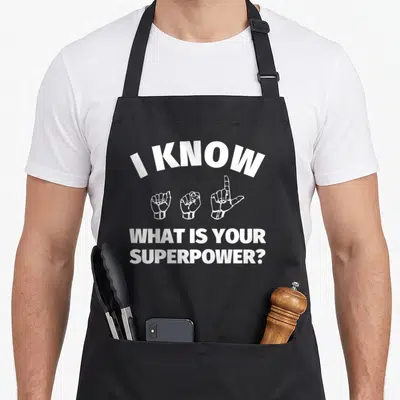
Racial Asl Sign for Apron Featuring BE KIND Text is printed on a black canvas apron — one size, made to order and shipped within the United States.
racial asl sign for apron puts the phrase BE KIND across the front panel, and the words sit above a row of six hands rendered in brown, tan, and orange hues. The gestures shown are specific forms used in sign language to communicate individual letters, creating a direct link between the text and the visual symbols. Wearing this garment demonstrates active support for accessibility and diversity, and it was designed specifically for interpreters, educators, and allies who wish to display these values visibly in their daily activities.
The central graphic consists of the words BE KIND printed in a bold, weathered font that evokes a retro style. Beneath the lettering, six hands are arranged in a single horizontal line, each colored in a different tone ranging from deep brown to light tan. These hands are not generic; they depict distinct finger positions corresponding to specific alphabetic signs. The combination of the distressed typography and the multicolored figures creates a unified image of solidarity. The layout places the textual command at the top to anchor the visual representation of the community below it.
This apron is most frequently worn by sign language interpreters and teachers who integrate their advocacy into their daily lives. It serves as a conversation starter during family gatherings or holiday meals where themes of equality are discussed. The design transforms a standard kitchen tool into a platform for expressing values without being aggressive. Home cooks who prioritize inclusivity find this item useful for signaling their openness to diverse perspectives while preparing food for others.
What are the dimensions of the pockets on this 10 oz cotton canvas apron? The two front pockets measure exactly 8 by 7 inches each and are split in the middle to provide extra storage space for tools or towels while maintaining structural integrity.
Does the ink on this heavy-duty fabric withstand repeated laundering without fading? Yes, the print is durable enough for frequent washing because the sturdy cotton canvas holds the pigment well, ensuring the message remains visible through many uses.
Are the hand gestures depicted actual American Sign Language characters? Yes, the six hands represent specific letter signs that spell out the concept above them, distinguishing this design from generic illustrations of raised fists or open palms.
Every apron is printed after you order it. Orders are processed Monday through Friday, excluding federal holidays — please allow 1-3 business days for order processing. After processing, shipping typically takes 3-7 business days inside the United States, so the total delivery time from order placement is 4-10 business days.
US orders under US$65.00 pay a flat US$4.95 shipping; orders of US$65.00 or more ship free. Bearhap ships within the United States only — we do not ship to international addresses.
You may request a return or exchange within 30 days of the purchase date, for any reason. The apron must be unopened, unused and in its original packaging, with proof of purchase. We refund the item price in full to the original payment method — the original US$4.95 shipping fee is not refundable — and Bearhap covers all return shipping costs: email contact@bearhap.com for a free return label.
Machine wash cold, inside out, with like colours. Tumble dry low or hang to dry. Do not iron directly over the print — press from the back if you need to. No bleach, no dry cleaning.
The ink is water-based and cures into the fabric, so it will soften with the canvas rather than peel off it.
You might also like
US$19.95

US$19.95