
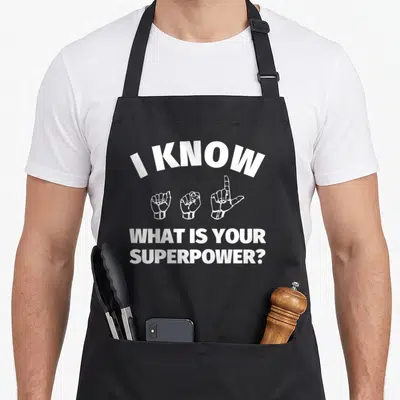

Sign Language
Vintage Language Asl Sign
Vintage language asl sign for apron - Three white ASL hand signs between text blocks reading It's Okay if You Don't
US$19.95
Flat US$4.95 US shipping · free over US$65.00 · sales tax is calculated from your shipping address at checkout.
1
US$19.95
Delivery to United States
Arrives —
Orders ship within the United States only. Flat US$4.95 shipping under US$65.00 — free from US$65.00.
Returns
Request a return or exchange within 30 days of purchase, for any reason — we cover return shipping.
Printed to order
Every apron is printed after you order it. Please allow 1-3 business days for processing before it leaves the print shop.
Vintage Language Asl Sign is printed on a black canvas apron — one size, made to order and shipped within the United States.
A vintage language asl sign for apron puts the printed words It's Okay if YOU Don't Speak across the upper front panel, and the phrase It's Kind Of A SMART PEOPLE Language Anyway lands as a validation of non-verbal communication for the wearer. Displaying three distinct hand shapes in white ink signals respect to the deaf community, and those who value inclusive interaction feel this piece was made for them.
A Closer Look At The Artwork
The artwork relies entirely on typography and silhouette rather than illustration. White lettering splits into two distinct blocks, one positioned above and one below a horizontal row of three hands. Each hand depicts a unique gesture using simple outlines against the background. The central placement of the hands physically connects the upper and lower sentences. This layout ensures the message reads as a unified statement about intelligence and accessibility rather than separate graphics.
Where It Earns Its Keep
Interpreters and deaf education teachers notice the specific hand configurations first. Gifting this vintage language asl sign for apron honors Deaf Day or supports a student learning finger language. The stiff 10 oz cotton canvas softens after a few washes while protecting clothing during daily kitchen tasks. It serves as a functional tool for cooks who also want to visibly advocate for their community.
Good To Know
Does this apron have storage space? Yes, it includes two front pockets measuring 8 x 7 inches each. These pockets are split in the middle to allow access from either side without removing the garment. This practical detail adds utility to the symbolic design for holding small kitchen tools.
Will the design stay sharp after cleaning? The print maintains its clarity through standard laundering because the white ink sits firmly on the dense 10 oz cotton canvas surface. The fabric texture helps lock the pigment in place, preventing fading or cracking even after repeated wash cycles. You can trust the longevity of the white graphics alongside the sturdy material.
Are these specific gestures universal? No, the three hands shown represent distinct signs within American Sign Language grammar. This design raises awareness for authentic representation rather than generic posing. The specific arrangement invites curiosity and accurate learning from those interested in the mechanics of hand talking.
Every apron is printed after you order it. Orders are processed Monday through Friday, excluding federal holidays — please allow 1-3 business days for order processing. After processing, shipping typically takes 3-7 business days inside the United States, so the total delivery time from order placement is 4-10 business days.
US orders under US$65.00 pay a flat US$4.95 shipping; orders of US$65.00 or more ship free. Bearhap ships within the United States only — we do not ship to international addresses.
You may request a return or exchange within 30 days of the purchase date, for any reason. The apron must be unopened, unused and in its original packaging, with proof of purchase. We refund the item price in full to the original payment method — the original US$4.95 shipping fee is not refundable — and Bearhap covers all return shipping costs: email contact@bearhap.com for a free return label.
Care
Machine wash cold, inside out, with like colours. Tumble dry low or hang to dry. Do not iron directly over the print — press from the back if you need to. No bleach, no dry cleaning.
The ink is water-based and cures into the fabric, so it will soften with the canvas rather than peel off it.
Questions about Sign Language aprons
- Who would appreciate these designs most?
- These are ideal for ASL students, interpreters, and Deaf individuals who want to show their linguistic identity. Family members of deaf loved ones also find meaningful resonance in the inclusive imagery provided by this specific collection.
- What themes are included here?
- Themes range from basic vocabulary like kindness and friendship to broader concepts like language rights. Seasonal greetings and humor are integrated to make the signs approachable for casual wearers and serious advocates alike.
- How do I choose the right one?
- Select based on your primary role in the community. Students might prefer educational signs, while advocates may choose inspirational messages. Consider whether you want subtle nods or bold statements about accessibility and inclusion.
You might also like
More sign language
- signing asl sign for apron
- social asl sign for apron
- read asl sign for apron
- cute language asl sign for apron
- beginner asl sign for apron
- practice asl sign for apron
- learning asl sign for apron
- language learning asl sign for apron


Cute Language Asl Sign
US$19.95

Beginner Asl Sign
US$19.95

Practice Asl Sign
US$19.95
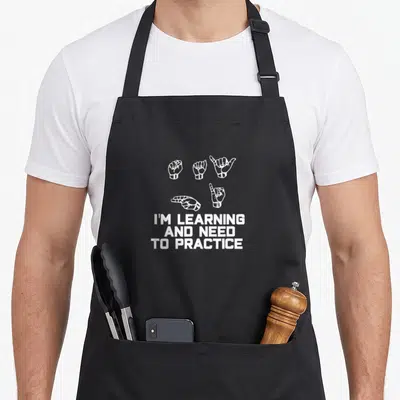
Learning Asl Sign
US$19.95

Language Learning Asl Sign
US$19.95