

Botanist
Botanist All Plants Apron Featuring Poisonous Plants Chart
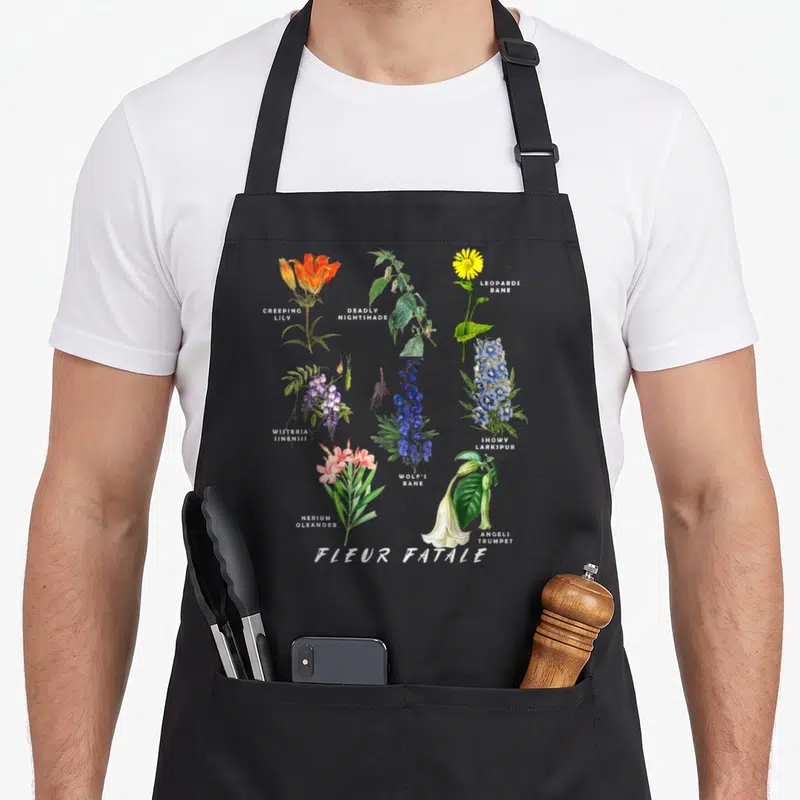
Botanist all plants apron - Poisonous plant illustrations labeled Creeping Lily Deadly Nightshade Leopards Bane
US$19.95
Flat US$4.95 US shipping · free over US$65.00 · sales tax is calculated from your shipping address at checkout.
1
US$19.95
Delivery to United States
Arrives —
Orders ship within the United States only. Flat US$4.95 shipping under US$65.00 — free from US$65.00.
Returns
Request a return or exchange within 30 days of purchase, for any reason — we cover return shipping.
Printed to order
Every apron is printed after you order it. Please allow 1-3 business days for processing before it leaves the print shop.
Botanist All Plants Apron Featuring Poisonous Plants Chart is printed on a black canvas apron — one size, made to order and shipped within the United States.
botanist all plants apron displays a chart of poisonous plants including Creeping Lily and Deadly Nightshade. The printed words identify specific toxic flora like Nerium Oleander and Wolf's Bane, while Fleur Fatale at the bottom translates to fatal flower. Wearing it signals a deep appreciation for botanical science and dangerous beauty, and gardeners who study botany feel this was made specifically for them.
The Artwork Explained
Realistic illustrations of seven distinct poisonous plants scatter across the front panel in green, blue, white, orange, and purple hues. Each specimen is paired with its name, ranging from Leopards Bane and Showy Larkspur to Wisteria Sinensis and Angels Trumpet. The phrase Fleur Fatale anchors the composition at the bottom center, labeling the collection as a fatal flower chart rather than a simple garden guide. This layout transforms the garment into an educational reference sheet that celebrates the aesthetic danger of nature through precise, scientific artistry.
Kitchens It Belongs In
Gardeners and plant enthusiasts wear this design when handling toxic species or studying horticulture in safe environments. It serves as a thoughtful gift for brothers, sisters, or parents who appreciate the darker side of gardening. The apron belongs in kitchens where food preparation meets botanical curiosity, protecting clothing while displaying knowledge of dangerous flora without relying on humor or jokes.
What Buyers Ask
What are the dimensions of the waist ties? The waist ties measure 42 inches on each side, providing enough length to tie securely in front for various body sizes. This generous measurement ensures the apron stays fastened comfortably during long hours of work or cooking, accommodating different torso lengths without slipping or requiring constant adjustment.
Does the ink resist washing and wear? The print uses durable inks that withstand regular laundering without fading or cracking. Realistic botanical details remain sharp because the printing method bonds deeply with the fabric, ensuring the colorful plant illustrations stay vibrant through multiple wash cycles and daily use in busy kitchens.
Why is this design unique compared to standard garden aprons? Unlike cheerful floral prints, this piece focuses exclusively on toxic species like Deadly Nightshade and Nerium Oleander. The inclusion of the Latin term Fleur Fatale distinguishes it as a serious botanical study rather than a decorative kitchen accessory, appealing to those interested in plant toxicity and scientific illustration.
Every apron is printed after you order it. Orders are processed Monday through Friday, excluding federal holidays — please allow 1-3 business days for order processing. After processing, shipping typically takes 3-7 business days inside the United States, so the total delivery time from order placement is 4-10 business days.
US orders under US$65.00 pay a flat US$4.95 shipping; orders of US$65.00 or more ship free. Bearhap ships within the United States only — we do not ship to international addresses.
You may request a return or exchange within 30 days of the purchase date, for any reason. The apron must be unopened, unused and in its original packaging, with proof of purchase. We refund the item price in full to the original payment method — the original US$4.95 shipping fee is not refundable — and Bearhap covers all return shipping costs: email contact@bearhap.com for a free return label.
Care
Machine wash cold, inside out, with like colours. Tumble dry low or hang to dry. Do not iron directly over the print — press from the back if you need to. No bleach, no dry cleaning.
The ink is water-based and cures into the fabric, so it will soften with the canvas rather than peel off it.
Questions about Botanist aprons
- Who is the ideal recipient for these botanical prints?
- These aprons suit professional botanists, hobbyist gardeners, and anyone who enjoys indoor houseplant care. They make excellent gifts for colleagues in agriculture departments or friends who frequently visit local nurseries. The designs resonate with people who value nature-inspired aesthetics during daily chores.
- What themes are featured in this specific set?
- The collection highlights various aspects of plant life, including wilting flowers, leaf anatomy, and floral patterns. Designs range from scientific illustrations to playful interpretations of growth cycles. Each print focuses on different species and botanical concepts relevant to modern gardening practices.
- How do I choose the right design for my style?
- Consider whether you prefer realistic botanical drawings or playful, abstract representations of plants. If you enjoy humor, look for designs depicting struggling flora. For a more serious tone, select prints that emphasize detailed leaf structures or specific flower types like roses or wildflowers.
You might also like
More botanist
- botanist lover mothers apron
- botanist gardener apron
- botanist plant apron
- pun plant apron
- botanical plant apron
- once plant apron
- vintage edible plant apron
- once gardening plant apron


