
Tibetan
Tara Tibetan Apron Featuring a White Line-art Deity
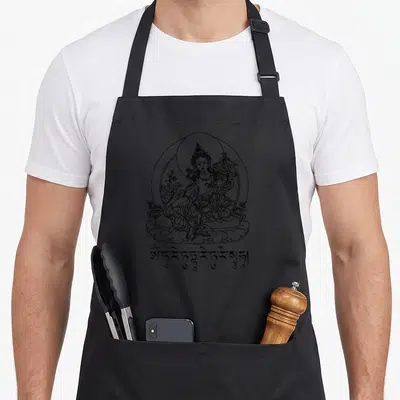
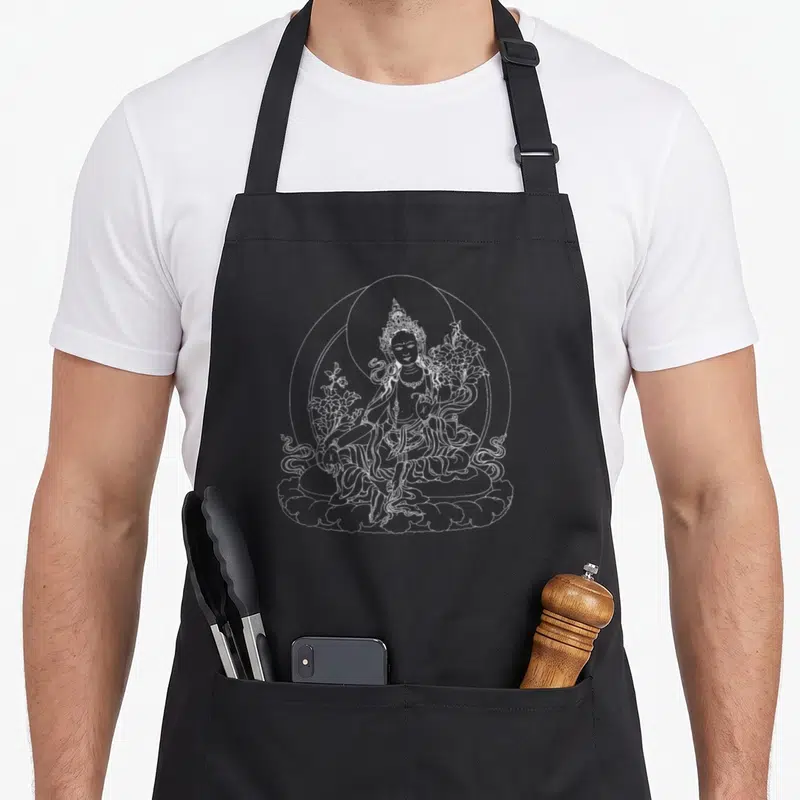
Tara tibetan apron - White line-art deity seated on lotus within circular halo on black apron
US$19.95
Flat US$4.95 US shipping · free over US$65.00 · sales tax is calculated from your shipping address at checkout.
1
US$19.95
Delivery to United States
Arrives —
Orders ship within the United States only. Flat US$4.95 shipping under US$65.00 — free from US$65.00.
Returns
Request a return or exchange within 30 days of purchase, for any reason — we cover return shipping.
Printed to order
Every apron is printed after you order it. Please allow 1-3 business days for processing before it leaves the print shop.
Tara Tibetan Apron Featuring a White Line-art Deity is printed on a black canvas apron — one size, made to order and shipped within the United States.
tara tibetan apron displays a central deity figure in white line-art sitting on a lotus and clouds within a circular halo. The design features no text, relying entirely on the Vajra form of the Goddess to communicate devotion. Wearing this garment signals a deep connection to Tibetan Buddhism and Vajrayana practice. It was made specifically for bodhisattvas, practitioners who recite mantras, and those visiting Rinpoches.
What The Print Says
The artwork presents a stark white line-art depiction of Green Tara against the black fabric background. A central deity figure sits in a meditative pose upon a lotus flower and stylized clouds. This sacred image is enclosed by a distinct circular halo that frames the composition. The intricate linework captures the Vajra form of the Goddess, highlighting her jewelry and flowing robes without shading. This visual representation belongs to the tradition of Tibetan Buddhist meditation and symbolizes the active compassion of the bodhisattva for all beings.
The Cook It Was Made For
This product serves as daily wear for Vajrayana practitioners and Buddhists dedicated to the Goddess. Gifting a tara tibetan apron honors someone who feels deep devotion to the bodhisattva or practices yoga and meditation. It is worn during kitchen work or study sessions where the wearer wishes to maintain a spiritual focus while performing mundane tasks.
Ordering Questions
What are the dimensions of the neck strap? The adjustable neck strap measures between 20 and 30 inches to ensure a secure fit. This range accommodates various body sizes and allows the wearer to tighten the apron comfortably over layers of clothing during active use.
How does the ink hold up after washing? The white print remains durable through standard laundering cycles because it adheres firmly to the black bib apron material. The high contrast between the white lines and dark fabric prevents fading from becoming visible over time.
Is this design suitable for specific religious practitioners? Yes, the artwork depicts the specific Vajra form of Green Tara recognized by those who recite mantras. Unlike generic patterns, this precise iconography resonates with individuals who visit Rinpoches or study Bodhicitta.
Every apron is printed after you order it. Orders are processed Monday through Friday, excluding federal holidays — please allow 1-3 business days for order processing. After processing, shipping typically takes 3-7 business days inside the United States, so the total delivery time from order placement is 4-10 business days.
US orders under US$65.00 pay a flat US$4.95 shipping; orders of US$65.00 or more ship free. Bearhap ships within the United States only — we do not ship to international addresses.
You may request a return or exchange within 30 days of the purchase date, for any reason. The apron must be unopened, unused and in its original packaging, with proof of purchase. We refund the item price in full to the original payment method — the original US$4.95 shipping fee is not refundable — and Bearhap covers all return shipping costs: email contact@bearhap.com for a free return label.
Care
Machine wash cold, inside out, with like colours. Tumble dry low or hang to dry. Do not iron directly over the print — press from the back if you need to. No bleach, no dry cleaning.
The ink is water-based and cures into the fabric, so it will soften with the canvas rather than peel off it.
Questions about Tibetan aprons
- Who typically buys these aprons?
- These aprons suit individuals interested in Buddhist philosophy, Tibetan history, or minimalist spiritual aesthetics. They are popular among practitioners seeking respectful attire for home use or creative workspaces where subtle symbolism enhances the environment without distraction.
- What symbols are featured?
- The collection includes depictions of Buddha figures, mantra inscriptions like Om Mani Padme Hum, traditional prayer wheels, and Bon religious iconography. These elements represent core tenets of compassion, wisdom, and protective energy central to Tibetan worldview.
- How do I choose a design?
- Select based on which aspect of Tibetan tradition resonates most with you. Choose the Buddha motif for enlightenment themes, the Mani design for mantra practice, or the Bon style for historical interest. Each design offers a unique entry point into understanding these rich cultural narratives.
You might also like
More tibetan
- buddha tara tibetan apron
- buddhism tibetan apron
- tara mantra tibetan apron
- buddha tibetan apron
- mantra tibetan apron
- padmasambhava tibetan apron
- vajrayana tibetan apron
- tibetan colorful aprons


